












Thank you for reading this post, don't forget to subscribe!
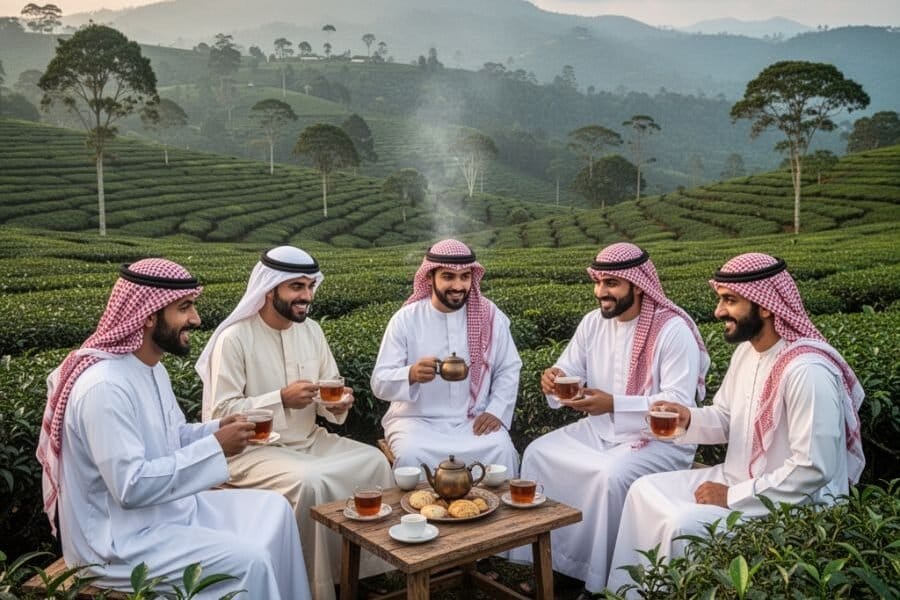
For decades, Puncak Bogor has been one of Indonesia’s most popular destinations for travelers from the Middle East. Located about two hours from Jakarta, the mountainous region offers cool weather, expansive tea plantations, and private villas that provide a sense of comfort and privacy highly valued by many visitors from the Gulf region.
Yet behind the vibrant tourism activity lies a deeper and often overlooked reality: the local tourism economy in Puncak is closely tied to geopolitical stability in the Middle East.
Each year, the spending generated by visitors from Gulf countries contributes trillions of rupiah to the regional tourism economy, supporting thousands of businesses and livelihoods in the area.
A Tourism Ecosystem Built Over Decades
Since the early 2000s, Puncak has gradually transformed into a destination that caters specifically to the preferences of Middle Eastern tourists. Local businesses adapted quickly, creating an ecosystem designed to serve this growing market.
Today, visitors along the Puncak corridor can easily find:
- Large family villas designed for extended stays
- Restaurants offering Middle Eastern cuisine
- Car rental services tailored for tourist mobility
- Arabic-speaking tour guides and service staff
- Shops and services adapted to Gulf visitor preferences
This tourism ecosystem supports a broad local economic chain. Beyond villa owners, the benefits extend to restaurant workers, drivers, tour guides, small vendors, and transportation operators.
For many residents in the Puncak area, the Middle Eastern holiday season represents the most economically important period of the year.
How Middle Eastern Geopolitics Influences Tourism Flows
Although Indonesia is geographically distant from the Middle East, developments in the region can directly affect travel patterns and tourism demand.
Several geopolitical and economic factors influence the number of visitors traveling abroad from the Gulf region:
1. Regional Security and Political Stability
Periods of political tension or regional conflict can influence public sentiment and travel decisions.
2. Economic Conditions in Gulf Countries
Oil prices and domestic economic performance significantly affect household spending power in Gulf states, which in turn impacts international tourism.
3. International Travel Policies
Changes in visa regulations, airline connectivity, and international travel policies can alter the accessibility of destinations like Indonesia.
4. Global Tourism Competition
Middle Eastern tourists today have an expanding range of destinations to choose from, including Türkiye, Malaysia, Thailand, and parts of Europe.
These dynamics demonstrate that Puncak’s tourism market is connected to global geopolitical and economic trends, rather than being driven solely by domestic tourism policies.
A Multi-Trillion-Rupiah Tourism Economy
Although comprehensive official data can be difficult to isolate, tourism analysts estimate that the spending generated by Middle Eastern visitors in the Puncak area reaches trillions of rupiah annually, particularly during the summer holiday period in Gulf countries.
The economic impact spreads across multiple sectors:
- Villa and accommodation rentals
- Restaurants and culinary services
- Transportation and car rental services
- Retail shopping and local markets
- Nature tourism and recreational activities
This spending creates significant income opportunities for local communities and has helped sustain one of the most dynamic tourism economies near Indonesia’s capital region.
The Risk of Overdependence on a Single Market
While the presence of Middle Eastern tourists has brought substantial economic benefits, reliance on a single international market can create structural vulnerabilities.
In the case of Puncak Bogor, several potential risks are becoming increasingly visible:
- Fluctuations in annual visitor numbers
- Growing competition from emerging tourism destinations
- Changing travel preferences among younger Middle Eastern travelers
- Unpredictable geopolitical developments in the region
If geopolitical instability or economic shocks were to significantly reduce outbound travel from the Gulf, the local tourism economy in Puncak could face considerable disruption.
Opportunities for Tourism Market Diversification
Industry observers increasingly suggest that Puncak’s long-term resilience will depend on its ability to diversify its tourism markets.
Potential strategies include:
- Expanding appeal to Indonesia’s growing domestic middle-class travelers
- Attracting visitors from East Asia and Southeast Asia
- Developing sustainable eco-tourism experiences
- Improving infrastructure and service quality across the region
Diversification would help build a more balanced and resilient tourism economy, capable of withstanding shifts in global travel patterns.
Puncak’s Future in the Global Tourism Landscape
Puncak Bogor remains one of Indonesia’s most distinctive tourism destinations. Its proximity to Jakarta, natural landscapes, and long-standing reputation among Middle Eastern travelers provide a strong foundation for continued growth.
However, in an increasingly interconnected world, local tourism economies are no longer insulated from global dynamics.
The story of Puncak illustrates how a mountain destination in Indonesia can become economically linked to geopolitical developments thousands of kilometers away in the Middle East.
Looking ahead, the sustainability of Puncak’s tourism economy will depend not only on its natural beauty, but also on its ability to adapt to evolving geopolitical realities and global tourism trends.
You must be logged in to post a comment.