


Thank you for reading this post, don't forget to subscribe!
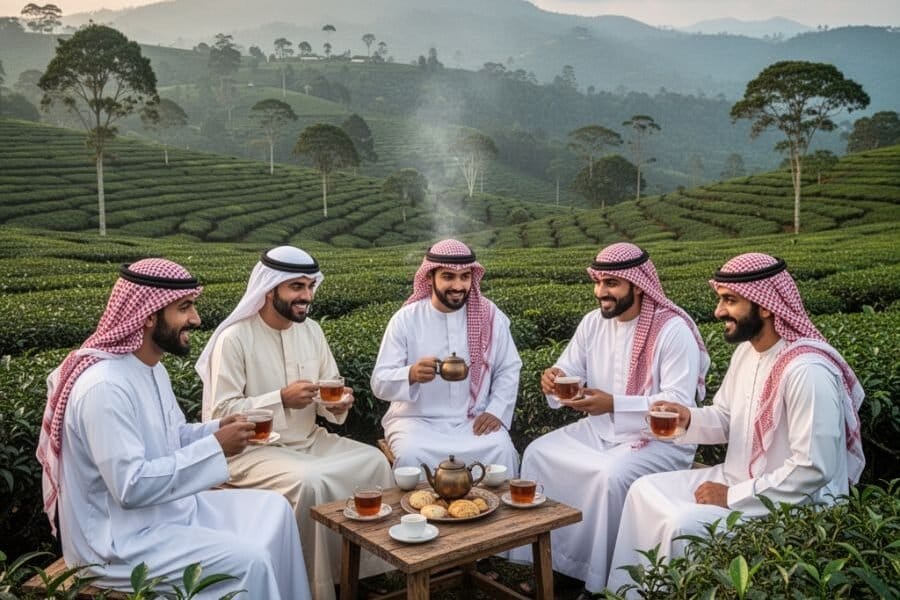
For decades, Puncak Bogor has been one of Indonesia’s most popular destinations for travelers from the Middle East. Located about two hours from Jakarta, the mountainous region offers cool weather, expansive tea plantations, and private villas that provide a sense of comfort and privacy highly valued by many visitors from the Gulf region.
Yet behind the vibrant tourism activity lies a deeper and often overlooked reality: the local tourism economy in Puncak is closely tied to geopolitical stability in the Middle East.
Each year, the spending generated by visitors from Gulf countries contributes trillions of rupiah to the regional tourism economy, supporting thousands of businesses and livelihoods in the area.
Een toeristisch ecosysteem dat in decennia is opgebouwd
Since the early 2000s, Puncak has gradually transformed into a destination that caters specifically to the preferences of Middle Eastern tourists. Local businesses adapted quickly, creating an ecosystem designed to serve this growing market.
Today, visitors along the Puncak corridor can easily find:
- Grote familievilla's ontworpen voor een langer verblijf
- Restaurants met gerechten uit het Midden-Oosten
- Autoverhuurdiensten op maat voor toeristische mobiliteit
- Arabisch sprekende gidsen en servicemedewerkers
- Winkels en diensten aangepast aan de voorkeuren van bezoekers uit de Golf
- Verhuur van villa's en accommodaties
- Restaurants en culinaire diensten
- Vervoer en autoverhuur
- Winkelen en lokale markten
- Natuurtoerisme en recreatieve activiteiten
- Schommelingen in jaarlijkse bezoekersaantallen
- Groeiende concurrentie van opkomende toeristische bestemmingen
- Veranderende reisvoorkeuren onder jongere reizigers uit het Midden-Oosten
- Onvoorspelbare geopolitieke ontwikkelingen in de regio
- Grotere aantrekkingskracht op de groeiende binnenlandse middenklasse van Indonesië
- Bezoekers aantrekken uit Oost-Azië en Zuidoost-Azië
- Duurzame ervaringen met ecotoerisme ontwikkelen
- Verbetering van infrastructuur en servicekwaliteit in de hele regio
Diversification would help build a more balanced and resilient tourism economy, capable of withstanding shifts in global travel patterns.
De toekomst van Puncak in het wereldwijde toeristische landschap
Puncak Bogor remains one of Indonesia’s most distinctive tourism destinations. Its proximity to Jakarta, natural landscapes, and long-standing reputation among Middle Eastern travelers provide a strong foundation for continued growth.
However, in an increasingly interconnected world, local tourism economies are no longer insulated from global dynamics.
The story of Puncak illustrates how a mountain destination in Indonesia can become economically linked to geopolitical developments thousands of kilometers away in the Middle East.
Looking ahead, the sustainability of Puncak’s tourism economy will depend not only on its natural beauty, but also on its ability to adapt to evolving geopolitical realities and global tourism trends.
If geopolitical instability or economic shocks were to significantly reduce outbound travel from the Gulf, the local tourism economy in Puncak could face considerable disruption.
Opportunities for Tourism Market Diversification
Industry observers increasingly suggest that Puncak’s long-term resilience will depend on its ability to diversify its tourism markets.
Potential strategies include:
This spending creates significant income opportunities for local communities and has helped sustain one of the most dynamic tourism economies near Indonesia’s capital region.
Het risico van te grote afhankelijkheid van een interne markt
While the presence of Middle Eastern tourists has brought substantial economic benefits, reliance on a single international market can create structural vulnerabilities.
In the case of Puncak Bogor, several potential risks are becoming increasingly visible:
This tourism ecosystem supports a broad local economic chain. Beyond villa owners, the benefits extend to restaurant workers, drivers, tour guides, small vendors, and transportation operators.
For many residents in the Puncak area, the Middle Eastern holiday season represents the most economically important period of the year.
Hoe geopolitiek in het Midden-Oosten de toeristenstromen beïnvloedt
Although Indonesia is geographically distant from the Middle East, developments in the region can directly affect travel patterns and tourism demand.
Several geopolitical and economic factors influence the number of visitors traveling abroad from the Gulf region:
1. Regionale veiligheid en politieke stabiliteit
Periods of political tension or regional conflict can influence public sentiment and travel decisions.
2. Economische omstandigheden in de Golfstaten
Oil prices and domestic economic performance significantly affect household spending power in Gulf states, which in turn impacts international tourism.
3. Internationaal reisbeleid
Changes in visa regulations, airline connectivity, and international travel policies can alter the accessibility of destinations like Indonesia.
4. Wereldwijde toeristische wedstrijd
Middle Eastern tourists today have an expanding range of destinations to choose from, including Türkiye, Malaysia, Thailand, and parts of Europe.
These dynamics demonstrate that Puncak’s tourism market is connected to global geopolitical and economic trends, rather than being driven solely by domestic tourism policies.
Een multi-trillion-Rupiah toerisme-economie
Although comprehensive official data can be difficult to isolate, tourism analysts estimate that the spending generated by Middle Eastern visitors in the Puncak area reaches trillions of rupiah annually, particularly during the summer holiday period in Gulf countries.
The economic impact spreads across multiple sectors:
Je moet ingelogd zijn om een reactie te plaatsen.